The ability to imagine new futures is under pressure. Before we find ourselves trapped in a world with only one story, we need to protect and exercise the muscle of imagination. That is what we do at .d.a.s.
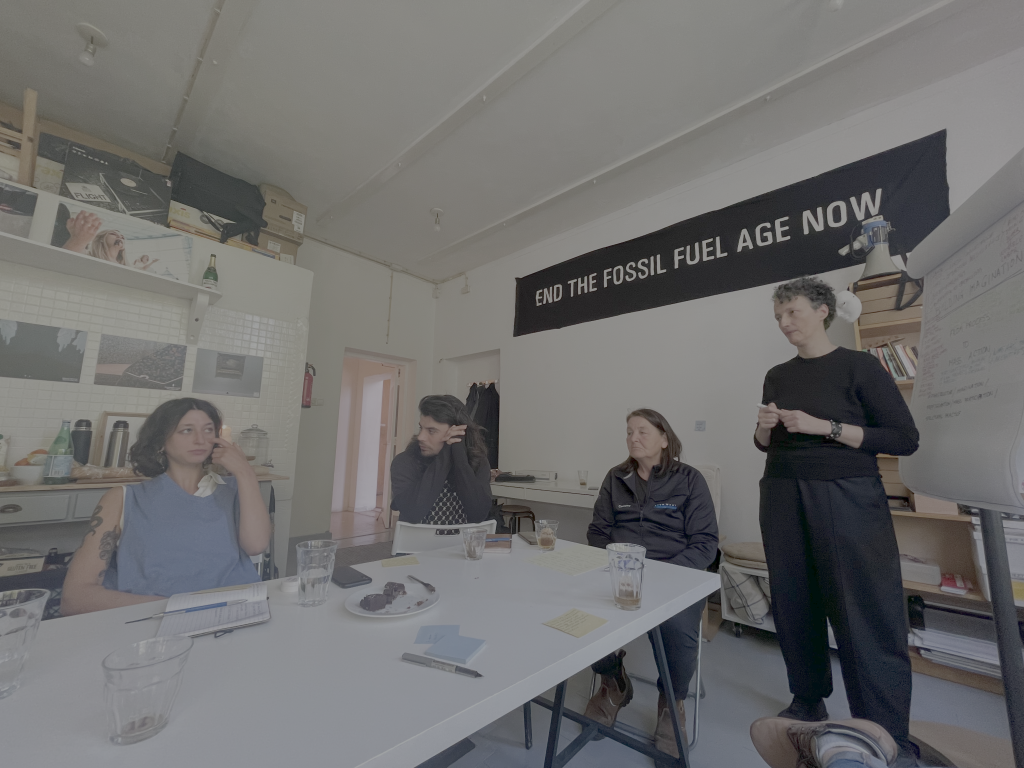
We opened the afternoon with an exercise proposed by Alex: presenting ourselves through body, voice, and word. It helped us shed our inhibitions, laugh, and move together, and it set a tone that made the rest of the session feel much more open and connected.
We then continued the discussion that surfaced at the launch event last December, “Building Imagination: From Process to Mass Action,” diving into four quotes:
Process as Infrastructure The real power of artistic disobedience lies in the invisible infrastructure of care, coordination, analysis, and trust that makes rapid collective action possible.
Structural Teaching Through Action Education for climate justice must move beyond individual skill acquisition, toward collective practices that materially reshape space and reveal structural constraints.
Inclusive Class Consciousness Effective mobilisation demands a shared inclusive class awareness that recognises how sacrifice and disruption affect different groups unevenly.
Monopoly on Imagination Academia and the art world gatekeep what counts as legitimate imagination, shaping which futures can be researched, funded, or even believed possible.

In the second part of the gathering, we did an exercise inspired by Ishmael, a novel by Daniel Quinn, in which a gorilla in captivity observes human civilization and argues that humans are equally trapped, inside a story of their own making. We took that provocation into the streets, photographing images that reinforce dominant narratives, then came together to reflect on what we saw and how those narratives connect to broader systems of capitalism, nature, identity, and the monopolisation of imagination.